A 1:6 scale model city for developing, testing, and breaking autonomous driving algorithms — safely, cheaply, and with real physics.
An 8m × 8m indoor model city with motion capture, traffic lights, and multiple autonomous vehicles operating simultaneously.
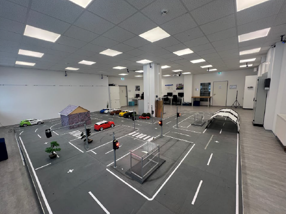
Test algorithms in a physical 1:6 scale model town — intersections, parking spots, and multi-lane roads with 83.2 cm road width and realistic markings.
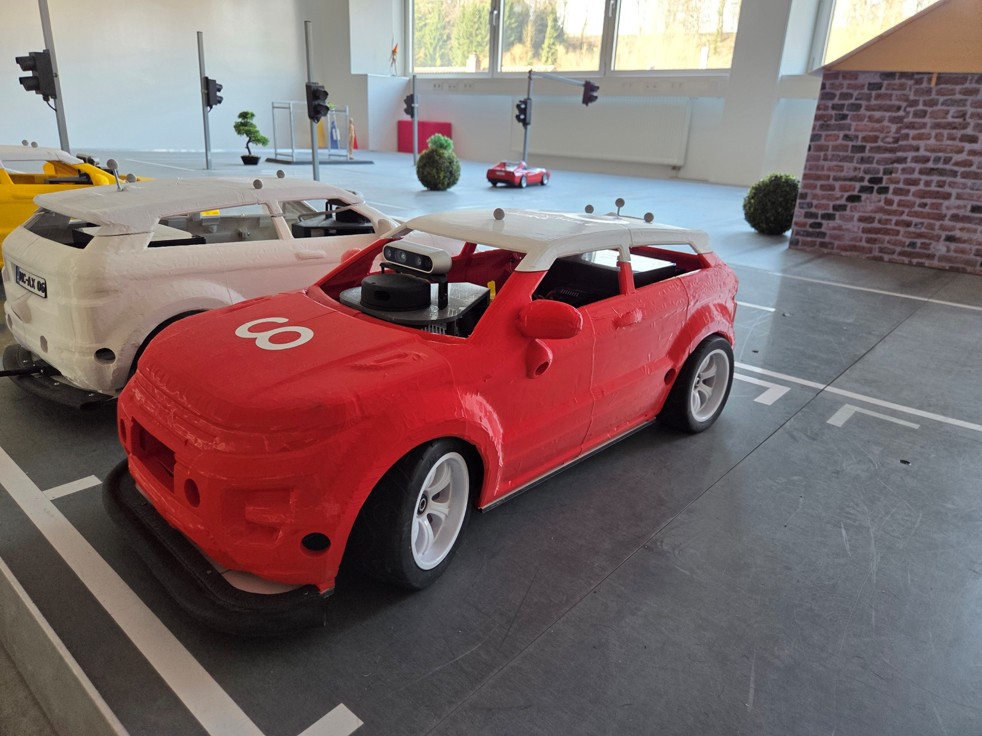
Combine onboard vehicle perception (RealSense D435, YDLidar G2) with global OptiTrack motion capture at 30 Hz for ground truth positioning.
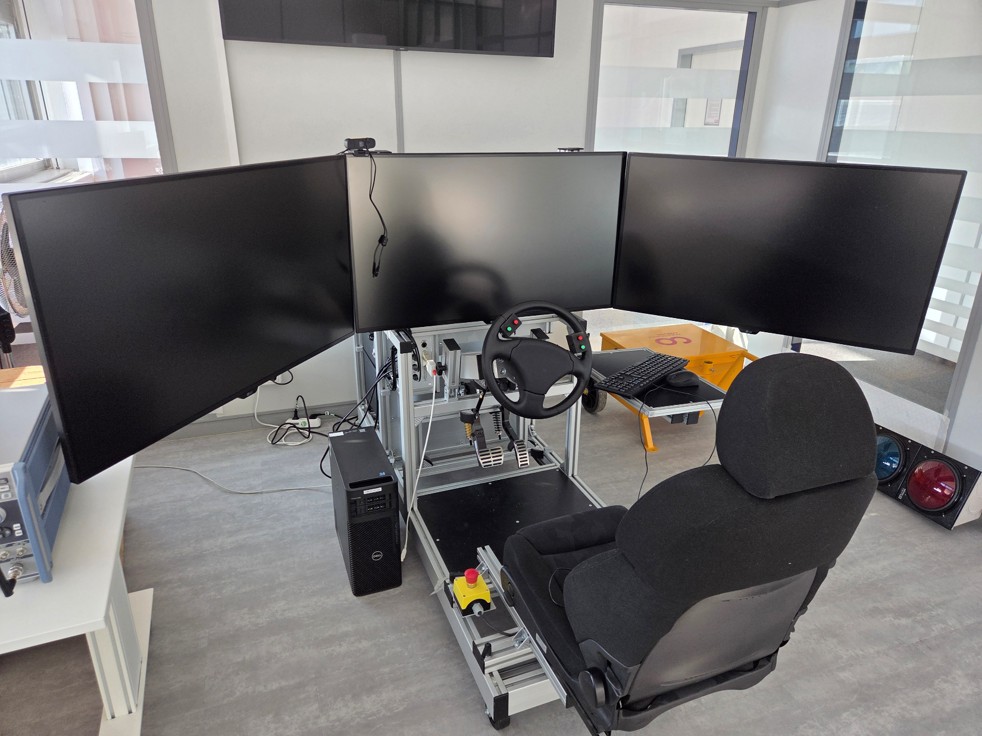
Connect a full multi-monitor driving simulator for human steering and intervention — bridging automated and supervised driving research.
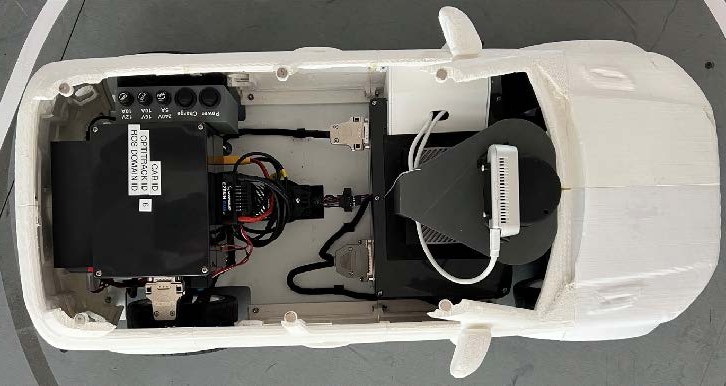
Purpose-built 1:6 scale autonomous vehicles with full sensor stacks, edge AI compute, and Ackermann steering.
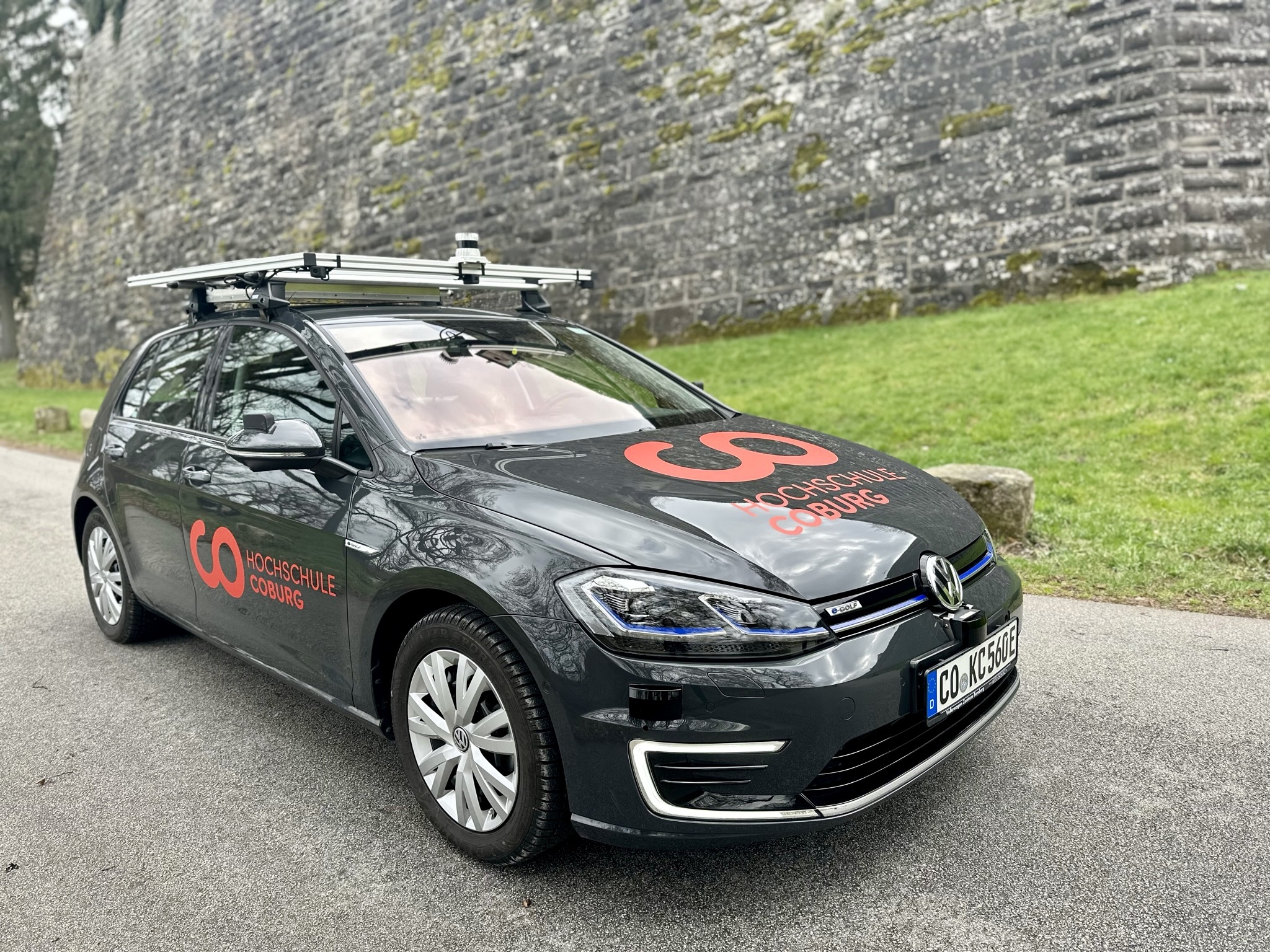
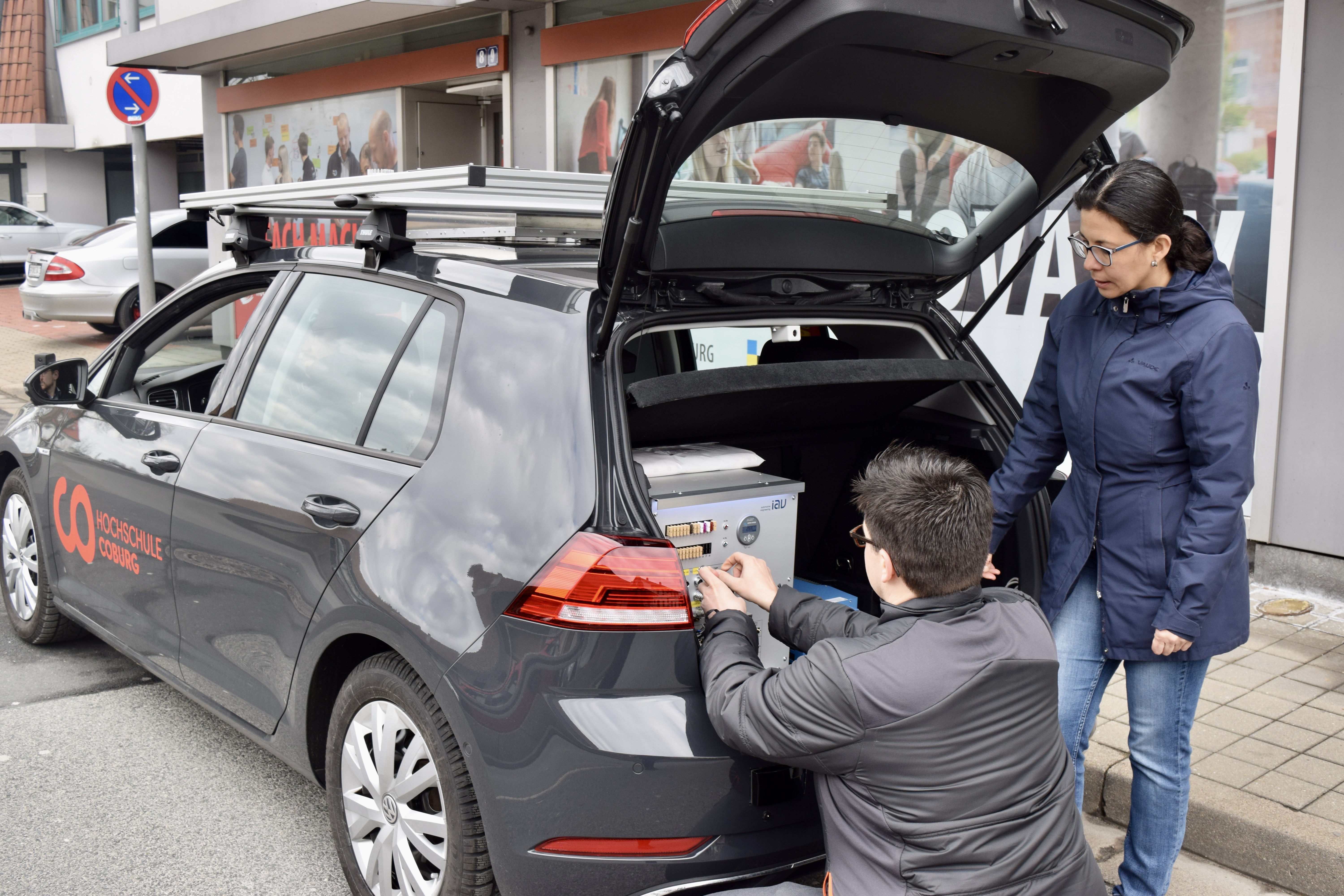
In addition to model-scale testing, the lab operates a full-size instrumented vehicle (eGolf). With an official autonomous driving license, LUCCA can be used for testing AD algorithms on public roads, full teleoperation, or large-scale data collection campaigns.
Our pillars of research — all validated in the physical safety of our model town.
Closing the gap between high-performing simulations and real-world application. We use ground truth injection to bypass onboard sensors and test with "perfect" perception data, then progressively add real-world noise.
Verifying the adversarial robustness of autonomous systems in real-life scenarios. From physical adversarial patches to sensor attacks — testing resilience where it matters.
Moving beyond synthetic tests and open-loop replays to validate planning methods in practice. Real vehicles, real intersections, real edge cases.
We're actively seeking partners from industry and academia — for joint research, sponsorship, or anything in between.